

Industrial packaging performance testing has traditionally relied on standardized lab simulations that may not reflect exactly what happens along a specific transit route. TransPak’s Field Data & Packaging Analytics practice closes that gap. By deploying high-fidelity environmental sensors on live shipments, TransPak captures real-world shock, vibration, temperature, humidity, and pressure data across every leg of the supply chain. This field data serves as a consultative foundation that informs packaging design, product design, and lab test procedures alike, while also enabling TransPak to identify active damage issues in existing supply chains and verify the safe delivery of high-value goods.
The result?
Packaging solutions validated against actual transport conditions, current damage issues identified and resolved faster, and documented proof that goods arrived safely.
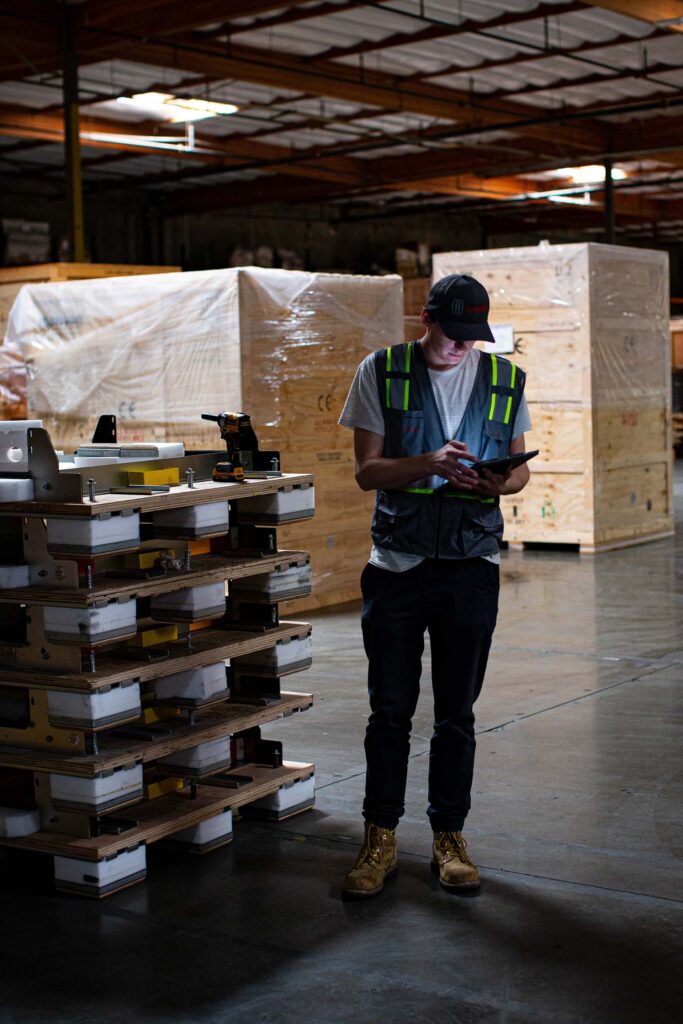
Safe asset delivery depends on a simple relationship: your product and its packaging must work together to survive the hazards of the distribution environment.
Shippers need to understand three variables:
how fragile is the product, how hazardous is the distribution environment, and how much protective packaging is needed to bridge the gap?
For high-value sectors like semiconductors, data center infrastructure, aerospace, and medical devices, gaps in that knowledge carry serious consequences. A single damaged wafer tool can halt production for weeks. A compromised server rack can delay a multi-million-dollar data center buildout. Industry-wide, freight damage costs U.S. shippers billions annually.
Packaging performance testing rooted in field data analytics measures and characterizes real supply chain hazards, establishing protective requirements and calibrating laboratory packaging validation testing to reflect actual conditions. Over time, statistically significant data enables packaging failure analysis that identifies emerging risks, supporting proactive mitigation and packaging optimization.
TransPak’s packaging engineering services start with a critical question: what is actually happening to your product in transit?
TransPak’s Field Data & Packaging Analytics practice is built on a methodology that connects real-world transport measurement directly to industrial packaging engineering services and laboratory validation. Lab testing, field testing, and design are intertwined: field and lab testing both inform and influence design decisions, and the insights from each discipline strengthen the others.
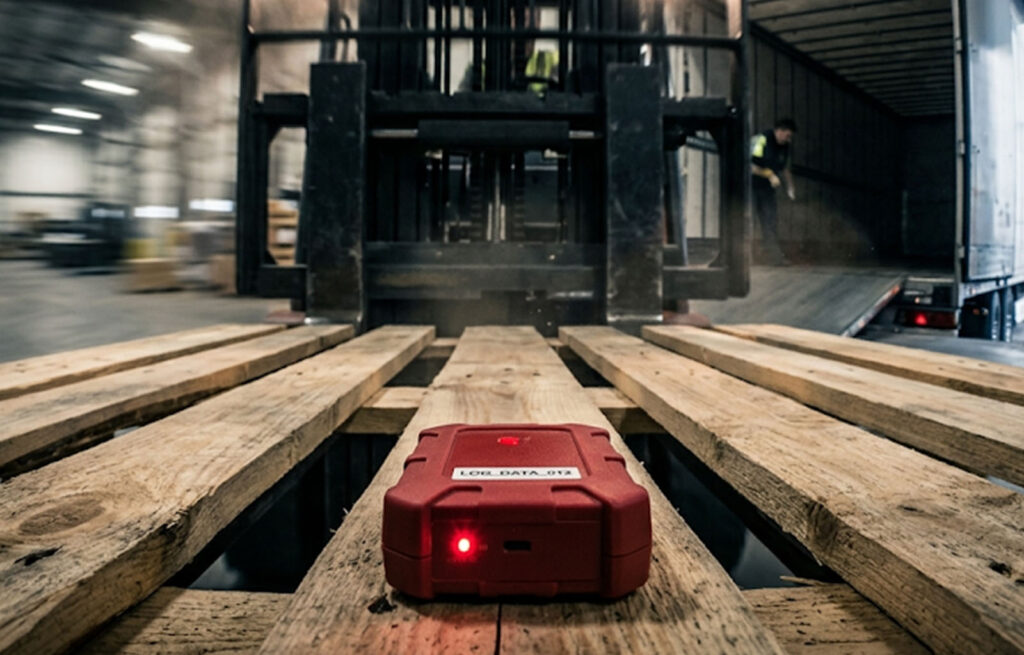
TransPak’s field testing begins by selecting and deploying the right fit–for–purpose environmental data recorders for each project, choosing from instruments such as the Lansmont SAVER 9X30, TIVE trackers, and others based on the measurement requirements, shipment profile, and customer objectives. These instruments can capture shock, vibration, temperature, humidity, tilt, rotation, and pressure at engineering-grade sampling rates. TransPak can instrument multiple locations in a shipment simultaneously, which reveals not just what hazard inputs occurred, but how the packaging solution responded – quantifying either the mitigation or amplification of that input energy. TransPak’s multi-modal compatibility covers the full range of transport modes used by global supply chains, including air freight, ocean containers, FTL/LTL trucks, and more.
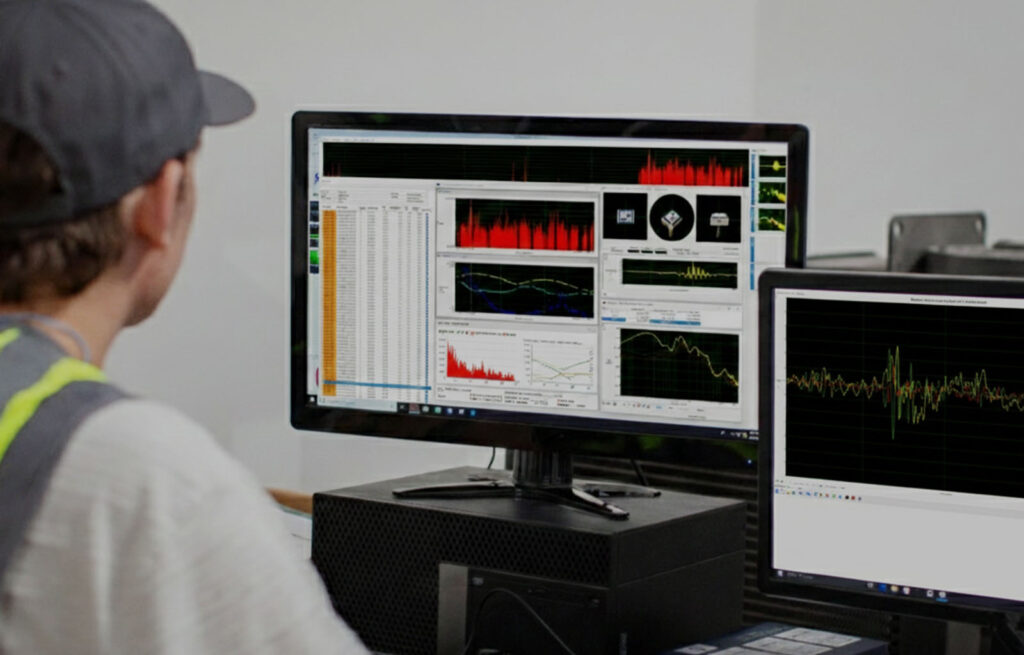
Raw data alone is not useful without interpretation. TransPak’s Field Data & Packaging Analytics team, led by Eric Joneson – a 35-year packaging engineering veteran and former ISTA President and Global Board member – translates high-resolution transport data into clear, actionable hazard profiles. The analysis identifies specific shock events, vibration spectra, temperature excursions, and handling anomalies within each shipment record. These field results are compared against established laboratory test protocols, such as ISTA 3-series and ASTM D4169, to assess how well current testing reflects real-world conditions. When gaps are identified, TransPak recommends enhancements to existing protocols or the development of new methodologies that better represent actual supply chain hazards.
TransPak delivers detailed reports that include complete characterizations of the transport environment, comparisons of field data to lab test data, specific recommendations for packaging design changes or test protocol refinements, and a clear pass/fail assessment of whether the engineered packaging solution performed as intended (including arrival-condition verification confirming the product was delivered safely within acceptable thresholds). This report becomes the foundation for crating and packaging validation testing. Beyond the written report, TransPak’s team works directly with customer stakeholders to translate findings into actionable packaging or product design changes, functioning as an extension of the customer’s own team.
TransPak’s comprehensive industrial packaging performance testing methodology aligns with ISTA and ASTM standards but allows for data-driven enhancements to those testing methods that may result in more accurate, efficient, and effective test and validation methodologies.
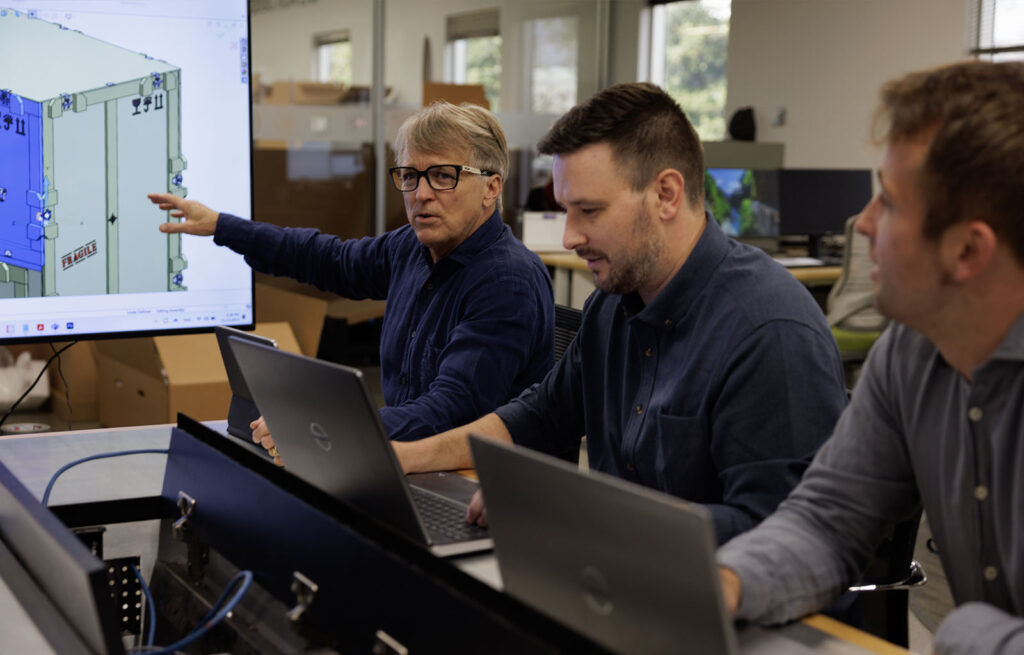
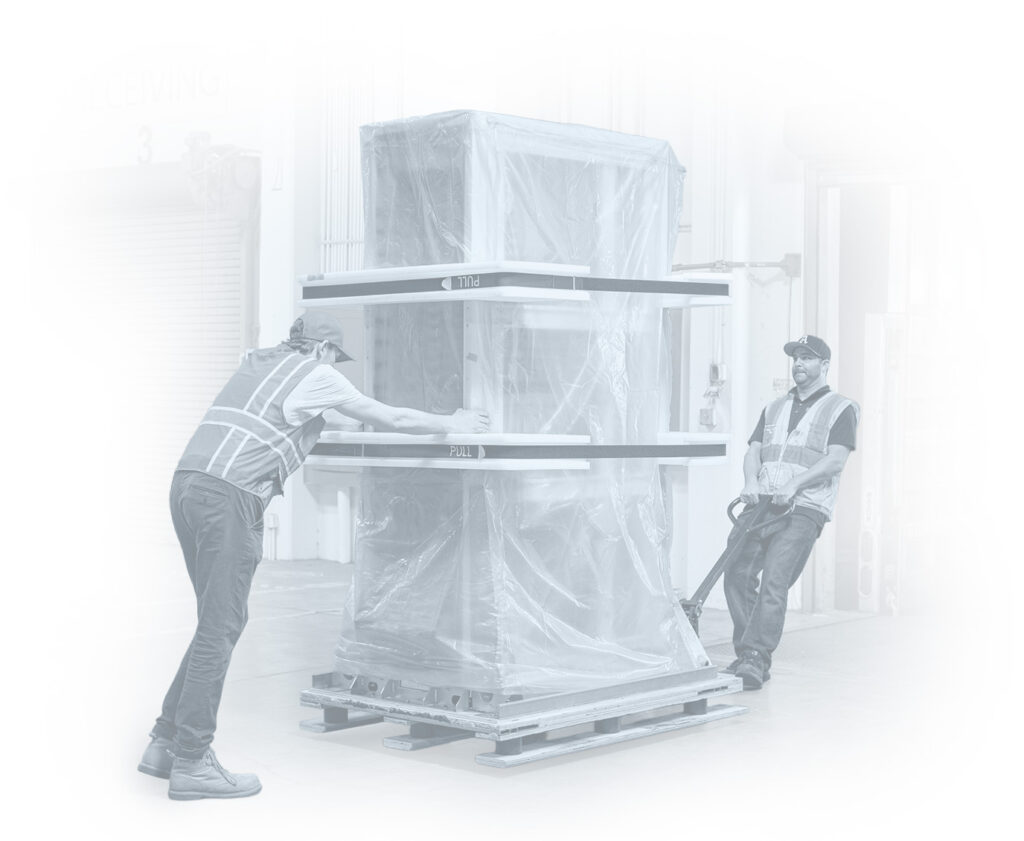
TransPak’s Field Data & Packaging Analytics team delivers a full suite of transport measurement and packaging engineering services designed for high-value, damage-sensitive industries.
In-Transit Environmental Monitoring
TransPak places calibrated data recorders on live shipments to capture shock, vibration, temperature, humidity, tilt, and pressure across the entire distribution path. High-fidelity data sampling provides engineering-grade motion analysis, the level of detail required to characterize individual drop events, resonant frequencies, and thermal cycles. TransPak manages the full logistics of device deployment and retrieval, eliminating one of the biggest pain points companies face when attempting field measurement programs on their own.
Transport Hazard Profiling
TransPak's analysts transform raw field data into transport hazard profiles that quantify the dynamic forces that products experience during shipping. These profiles identify the frequency, magnitude, and duration of impact events by transport leg — isolating, for example, whether the most damaging handling occurs at origin loading, at intermodal transfer points, or at destination delivery. This analysis helps to pinpoint where hazard risk exists in the supply chain.
Field to lab Correlation and Test Optimization
TransPak compares field-measured hazard data against existing lab pre-shipment testing protocols to identify gaps and redundancies. If a lab test requires a 9-inch drop, but field data shows a maximum drop of 4 inches, TransPak can recommend right-sizing the test, reducing material costs and improving sustainability outcomes without sacrificing protection. Conversely, if field data reveals vibration spectra not captured by current testing, TransPak can recommend protocol additions and/or modifications. This work maintains ISTA, ASTM D4169, and ISO 4180 compliance while tailoring tests to more accurately reflect reality.
Damage Investigation and Root Cause Analysis
When damage occurs, TransPak's instrumented shipment data enables rapid packaging failure analysis. Rather than speculating about what went wrong, TransPak provides time-stamped, GPS-correlated evidence of the exact event (for example, the specific shock magnitude, duration, and velocity change along with location, and time) associated with the damage.
Safe-Delivery Verification
For customers shipping high-value assets like semiconductor tools, server racks, medical imaging systems, or aerospace components, TransPak provides arrival-condition verification. Field data confirms the products’ condition upon arrival, verifying that the product remained within acceptable shock, vibration, and environmental thresholds throughout transit. These summary reports provide documented proof of safe delivery for quality assurance and regulatory compliance.
TransPak’s Field Data & Packaging Analytics team brings nearly four decades of combined hands-on experience in engineered packaging instrumentation, standards development, and transport measurement. Eric Joneson, VP of Field Data & Packaging Analytics, is a Michigan State School of Packaging graduate who spent over three decades at Lansmont Corporation — the company that created one of the environmental data recorders used industry-wide. He has served on both the ISTA and the IAPRI Boards and works with universities and industry groups worldwide. Grant Badstubner, Field Data Analyst, holds a Master’s in Packaging from Cal Poly San Luis Obispo and brings direct experience managing field measurement programs from his eight years at Lansmont. Through decades of real-world measurement experiences, TransPak’s Field Data experts helped build the discipline.
The biggest pain points in field data collection have historically been logistics (getting recorders installed and retrieved) and data interpretation (turning raw shock and vibration readings into useful engineering inputs). TransPak holistically integrates field data collection, expert analysis, packaging design engineering, lab testing, and logistics services into a single offering. As a result, customers save headaches by working with a single partner instead of coordinating with a sensor vendor, a third-party lab, a packaging designer, and a freight provider. This integrated model also means that when a damage issue surfaces in the field, TransPak can move from root-cause analysis to a validated packaging design fix without handing off between vendors. TransPak stands alone as a strategic partner that offers complete and comprehensive packaging solutions.
TransPak operates more than 80 locations across North America, Europe, and Asia. This global footprint means TransPak can deploy field measurement programs on shipping routes spanning continents (like from a clean room in Taiwan to a fab in Arizona), with teams managing instrumentation at both origin and destination.
TransPak’s engineered packaging performance testing is backed by ISTA-certified lab capabilities, ISO 9001–certified quality management, and IATA compliance for air freight, providing the certifications and standards alignment that procurement and quality teams require.
Field Data & Packaging Analytics, also referred to as field testing, is the practice of deploying environmental sensors on live shipments to capture real-world shock, vibration, temperature, humidity, and pressure data, then analyzing that data to inform packaging and crating design and validate lab test methods. TransPak’s Field Data & Packaging Analytics practice transforms raw transport measurements into actionable reports that define packaging design criteria and support transport simulation testing.
Standard lab testing simulates transport hazards using predefined protocols such as ISTA 3-series or ASTM D4169. Field Data & Packaging Analytics packaging performance testing incorporates real-world field data to validate whether those lab simulations accurately reflect actual shipping conditions. TransPak’s approach compares field-measured hazard profiles against lab protocols to identify gaps, redundancies, and optimization opportunities.
TransPak’s environmental data recorders measure shock (impact events), vibration (continuous and random), temperature, humidity, tilt, rotation, and atmospheric pressure. High-resolution sampling rates provide engineering-grade detail — enough to characterize individual drop events, resonant frequencies, and thermal cycles across multi-modal transport routes, including truck, air, ocean, and more.
Semiconductors, data center and server rack infrastructure, aerospace and defense, and medical devices are the industries where TransPak’s packaging validation testing delivers the highest value. These sectors ship products where a single damage event can cost millions in direct replacement costs and production delays.
TransPak’s instrumented shipment data provides time–stamped, GPS-correlated evidence of every shock, vibration, and environmental event during transit. When damage occurs, TransPak’s analysts enable root cause determination by identifying the exact moment, location, and magnitude of the causative event. This data can support insurance claims, carrier accountability, and corrective action with defensible, engineering-grade evidence.
TransPak deploys a range of environmental data recorders selected to match each project’s requirements. Common instruments include the Lansmont SAVER 9X30, a compact, high-fidelity recorder that measures tri-axial shock, vibration, temperature, and humidity at high sampling rates; and TIVE trackers, which provide real-time GPS-enabled condition monitoring. TransPak’s team selects and configures the right instrumentation for each route, transport mode, and measurement objective.
TransPak operates more than 80 locations across North America, Europe, and Asia. This global infrastructure allows TransPak to deploy and retrieve environmental data recorders on routes spanning multiple countries and transport modes, from origin factory to final destination, without requiring customers to manage instrumentation logistics.
From initial scoping through sensor deployment, data collection, analysis, and final report delivery, a standard field measurement program typically runs between two weeks and a couple of months, depending on route length, number of shipments instrumented, and complexity of the analysis. TransPak’s integrated logistics and engineering capabilities compress timelines that would take longer when coordinating multiple vendors.
Field data sometimes reveals that real-world transport conditions are less severe than what standard lab tests simulate. When TransPak’s analysis confirms that a route produces maximum drop height events smaller than those performed in lab testing, packaging engineers can right-size materials by reducing foam density, wall thickness, or cushioning volume. Field Data & Packaging Analytics customers typically identify packaging and crating cost reduction opportunities while maintaining protection levels.
TransPak’s packaging performance testing aligns with and supports ISTA (International Safe Transit Association) test procedures, including the 3-series transit-simulation protocols, ASTM D4169 standard practice for performance testing of shipping containers, and ISO 4180 packaging distribution testing. TransPak’s ISTA-certified labs and ISO 9001 quality management system ensure that field-data-informed test programs meet the compliance requirements expected by global OEMs.
TransPak’s Field Data & Packaging Analytics practice gives supply chain and industrial packaging leaders what assumptions never can: measurable, defensible proof that their packaging works, a clear diagnosis of active damage issues, and verified safe delivery of their most valuable assets. With more than 80 locations across three continents, ISTA-certified labs, and a team that helped build the Field Data & Packaging Analytics discipline, TransPak is the single-source partner for engineered packaging performance testing backed by real transport data. Request a free assessment and find out what your shipments are really experiencing.
We and third parties use cookies, pixels, and web beacons to collect and share internet or other electronic network activity personal identifiers (such as IP addresses and device identifiers). These technologies help our website function, save your preferences, analyze how you use our site, personalize your experience, measure advertising performance, and show you relevant ads. Under some state privacy laws, our use of third-party cookies may count as a “sale” or “sharing” (i.e., targeted advertising). To manage your preferences for non-essential cookies, select Customize. If your browser sends an opt-out signal (like Global Privacy Control), we will honor it. For more details, see our Privacy Notice